Cheap software shifts value beyond the build
Building simple software is getting much cheaper. Someone who can describe a tool clearly can often get a working version in an afternoon, which changes the build-or-buy decision for small, single-purpose tools.
What it doesn’t change much is everything around the code, and that is where I think the value moves.
A window that closes
For now there is an arbitrage in it. While the tools are new and unevenly used, people who build quickly can make something useful before others notice the opportunity. The window narrows as more people use the same tools and the obvious gaps get filled.
Disposable and durable software
The more lasting effect is a split. A disposable tool solves one person’s problem this week; if it breaks, they rebuild it or move on.
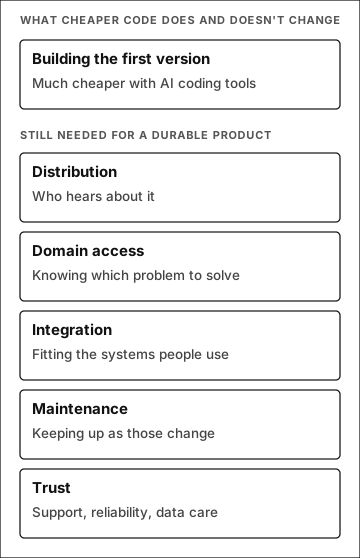
A durable product has to keep working for other people for years. It has to fit the systems they already use, keep up as those systems change, offer support when something goes wrong and earn trust with their data.
Cheaper code lowers the cost of the first version far more than the cost of the rest. Distribution still decides who hears about a product, and domain access still decides who understands a problem well enough to solve the right one.
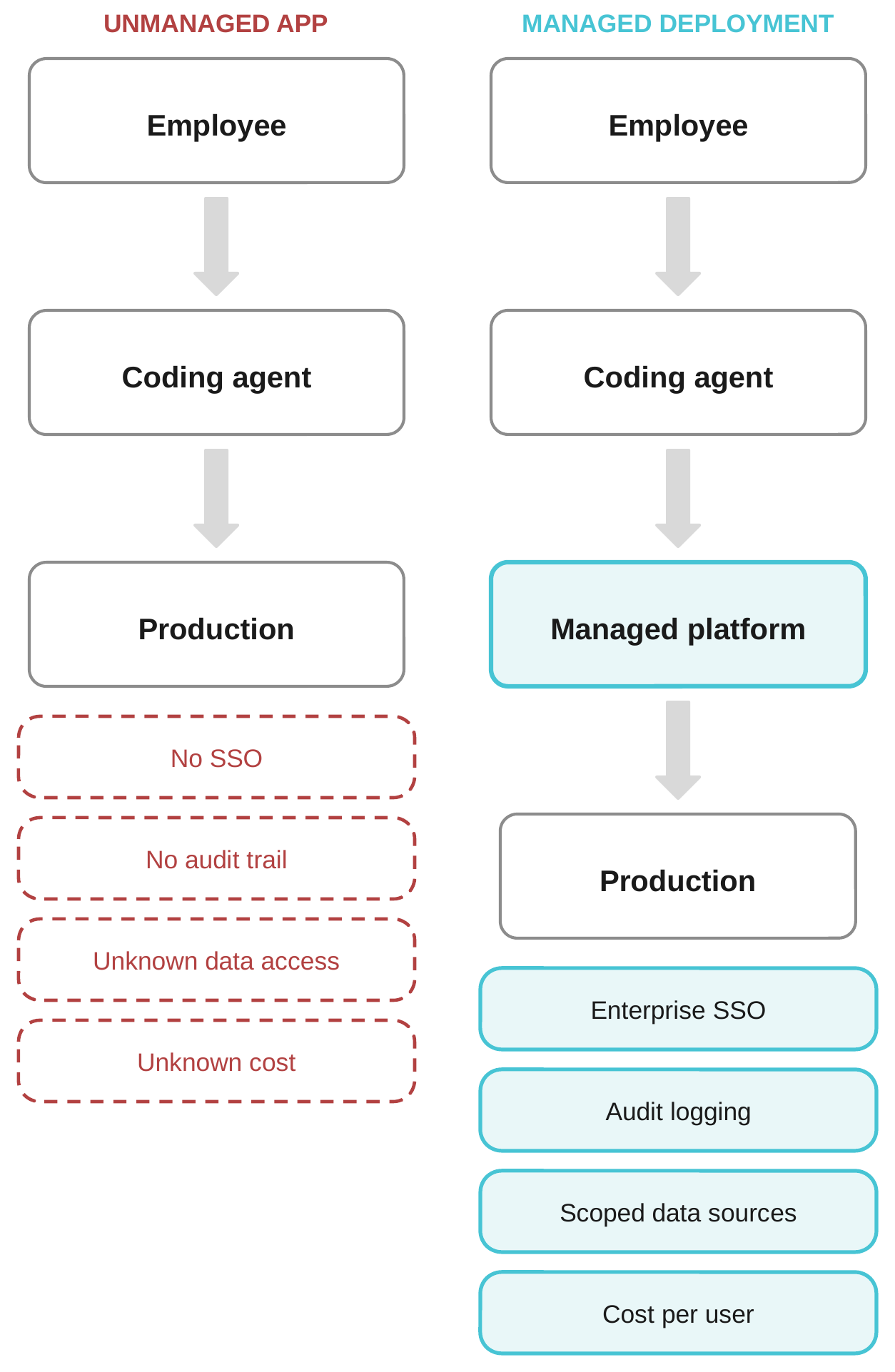
The difference shows up as soon as a tool leaves the person who built it. Say an employee uses a coding agent to make an app their team starts relying on. Building it takes the same effort either way. Running it for other people doesn’t: someone has to own sign-in, decide which data it may touch, keep an audit trail and pay for it.
None of this means anyone can build anything. Complex, regulated or high-reliability software still needs expertise, testing and someone accountable for it, and a working demo is not a product people depend on.
Who gains
Individuals and small teams building tools for their own work gain, along with businesses whose value already sits in distribution, integrations, data or trust. The most exposed are simple, single-purpose products sold mainly on features that are now cheap to reproduce.
The case against is that self-built tools cost more to maintain than people expect, so most teams drift back to buying and the window closes almost as soon as it opens. If, two years from now, small teams still aren’t replacing purchased tools with their own in any meaningful number, or the cost of building simple software stops falling, I’ll have been wrong.