The workflow is the unit of AI economics
The price of a token is the number everyone quotes, but it isn’t what a business buys. A company pays for finished work: a resolved ticket, a reconciled invoice, a contract draft a lawyer accepts.
The useful unit of AI economics is the cost of a completed, useful task, and most of the decisions worth making sit at that level.
One task, many calls
An agent plans, calls tools, reads the results, retries when something fails and checks its own work. Then a person often reviews the output and fixes what’s wrong. The cost of a successful task includes the failed attempts and that review and rework.
Cheaper tokens also invite longer tasks and new uses, so a falling price per token says little about the total bill.
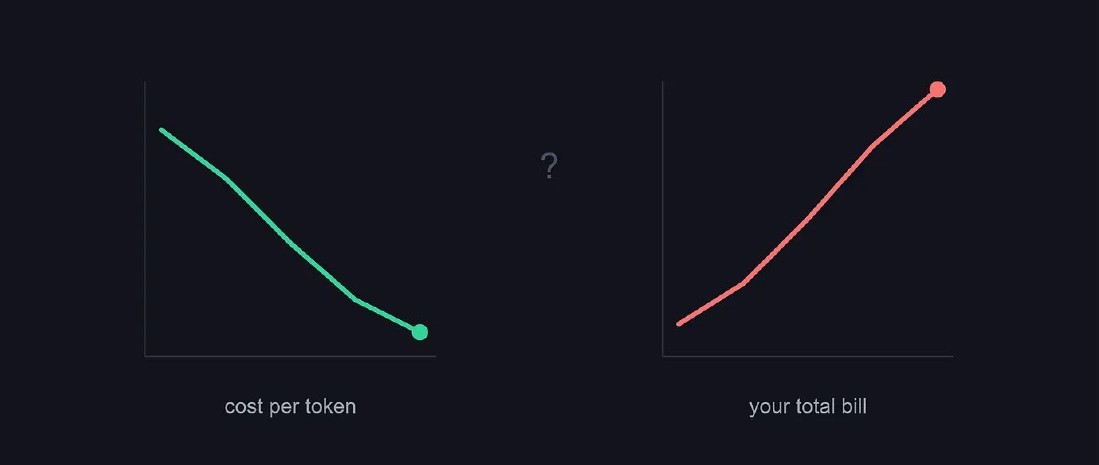
I don’t have data that settles which is more common, so I’m not assuming bills rise.
Routing is a lever
A smaller, cheaper model may be good enough for a routine step, but someone has to define good enough for that task and check it, or the savings come back as rework.
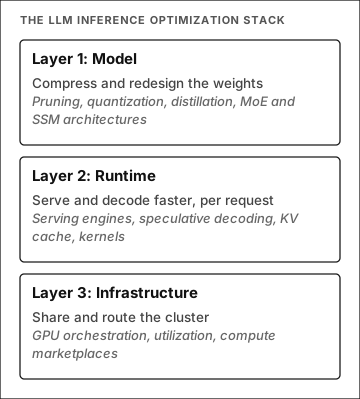
AT&T says its AI gateway, which uses cache-aware routing to send each request to a cost-effective model, has cut its AI costs by as much as 90% while handling about 45 billion tokens a day.[1] Routing is only one layer. The model, the runtime that serves it and the cluster underneath can each be made cheaper too.
Returns are harder to see
In Stripe’s sector data, industries that use more AI have grown productivity faster recently, but they were also growing faster before generative AI existed.[2]
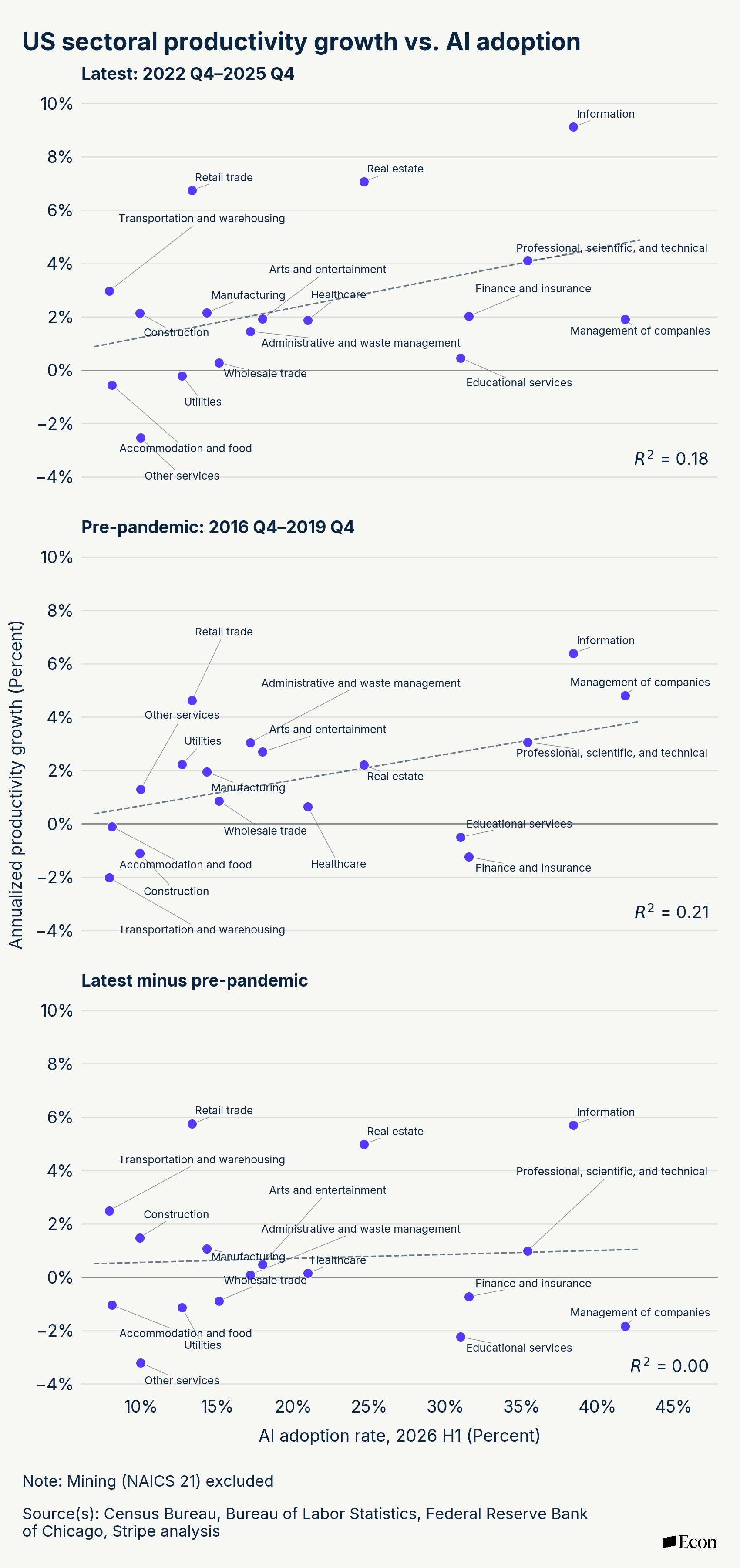
If returns don’t show up in the totals yet, they have to be measured where the work happens, one workflow at a time. Cloud pushed companies to track spend by service and team, and AI may push that discipline down to the task. The comparison has limits: it doesn’t tell me models will commoditize or that applications will capture most of the value.
Finance and operations teams running agents at scale would pay for tools that tie cost, including review time, to the outcome of each workflow, and vendors who can price by outcome would have an edge. It could just as easily stay a feature of existing cloud cost and observability tools. I’d drop the idea if teams that measure AI per workflow make no better decisions about what to run than teams that only watch the monthly bill.
Notes:
-
AT&T, “The tokenomics equation,” 2026. The figure is the company’s own, for its own setup. ↩︎
-
Ernie Tedeschi, “AI and productivity,” Stripe Economics, July 23, 2026. This is early, sector-level data about returns, not about token prices or spending. ↩︎